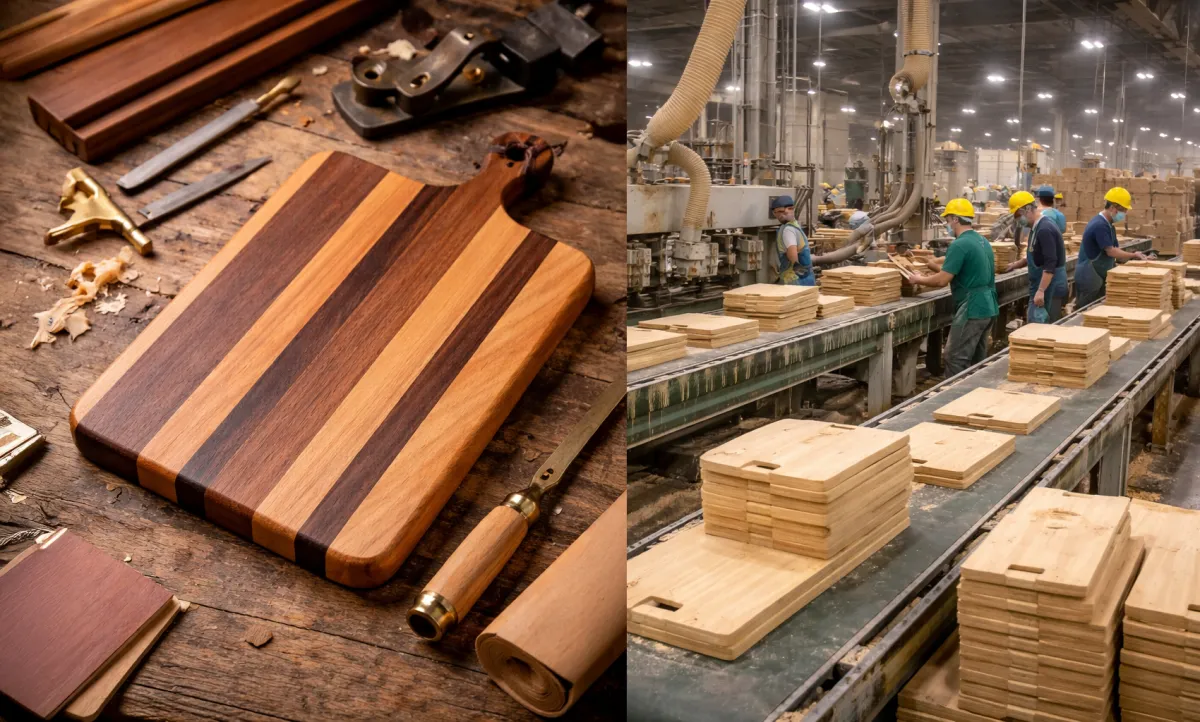
Handmade vs. Mass-Produced Wood Boards: What’s the Difference?
Handmade wood boards are built with careful attention to wood selection, grain orientation, construction, adhesives, and finishing. The result is a board with more character, greater durability, and a higher level of craftsmanship. Mass-produced boards, on the other hand, are made for speed and uniformity, often placing efficiency and cost above long-term performance.
How Handmade Wood Boards Are Made
Handmade boards are crafted one piece at a time. Each one starts with carefully selected hardwood chosen for its strength, stability, and natural beauty. The maker considers how the wood grain runs, how the pieces fit together, what adhesive is used, and how the board will perform over time.
Common qualities of handmade boards include:
Intentional wood selection
Thoughtful grain alignment
Food-safe glues designed for kitchen use
Hand-applied food-safe finishes
Individual inspection and refinement
Because the process is more deliberate, handmade boards are often built to better handle natural wood movement, repeated use, and direct contact with food.
A quality handmade board is typically assembled with food-safe wood glue and finished with products such as mineral oil or beeswax blends that are specifically intended for surfaces that come into contact with food. These materials help protect the board while giving the owner confidence that the board is safe to use in the kitchen.
How Mass-Produced Boards Differ
Mass-produced boards are manufactured in high volumes using standardized processes. This makes them efficient to produce and widely available, but it can also mean less attention to the details that affect long-term durability, safety, and performance.
Common characteristics of mass-produced boards include:
Uniform sizing and appearance
Faster production timelines
Limited wood selection
Thinner construction
Less transparency about the materials used
Many lower-cost mass-produced boards, especially imported products, may not clearly identify the type of glue, finish, or wood treatment used in manufacturing. In some cases, boards produced overseas may use lower-cost adhesives or finishes that are not specifically intended for food-contact surfaces.
This does not mean every imported board is unsafe, but it does make it more important to know where the board came from and whether the manufacturer provides clear information about the materials used.
Durability and Performance Over Time
One of the biggest differences between handmade and mass-produced boards becomes clear with use. Handmade boards are often thicker, more stable, and more carefully finished, helping them resist warping, cracking, and excessive wear.
Mass-produced boards may:
Show knife wear sooner
Absorb moisture more easily
Lose structural integrity over time
Delaminate if lower-quality glue is used
The longer a board is used, the more noticeable these differences can become. A board made with better wood, better construction, and better adhesives is more likely to remain strong and attractive for years.
Uniqueness and Character
No two handmade wood boards are exactly alike. Natural grain patterns, subtle color variations, and hand-finished details give each board its own distinctive look and feel.
Mass-produced boards are designed for consistency, which can be appealing in some settings, but they do not offer the same individuality or one-of-a-kind character.
How We Approach Our Craft
At Wine Country Woodcraft, we build every board by hand with purpose. We use carefully selected hardwoods, food-safe glue, and food-safe finishes chosen specifically for kitchen use. Every board is built with balanced construction and finished to help protect the wood while highlighting its natural beauty.
Before any board leaves our shop, it is individually inspected to ensure it meets our standards for quality, durability, and safe everyday use.
Bottom Line
The difference between handmade and mass-produced wood boards comes down to intention. Handmade boards are built with craftsmanship, durability, safe materials, and individuality in mind. Mass-produced boards are made for efficiency, consistency, and volume.
When choosing a board, it is worth looking beyond appearance and price. Understanding what materials were used, how the board was built, and whether it was designed for long-term kitchen use can help you choose a board that is both beautiful and built to last.
Wine Country Woodcraft
www.WineCountryWoodcraft.com
